Aioli Basics: Mastering a Foolproof Garlic Emulsion
This post may contain affiliate links, which means that I make a small commission off…
This post may contain affiliate links, which means that I make a small commission off items you purchase at no additional cost to you. Please read my Affiliate Disclosure
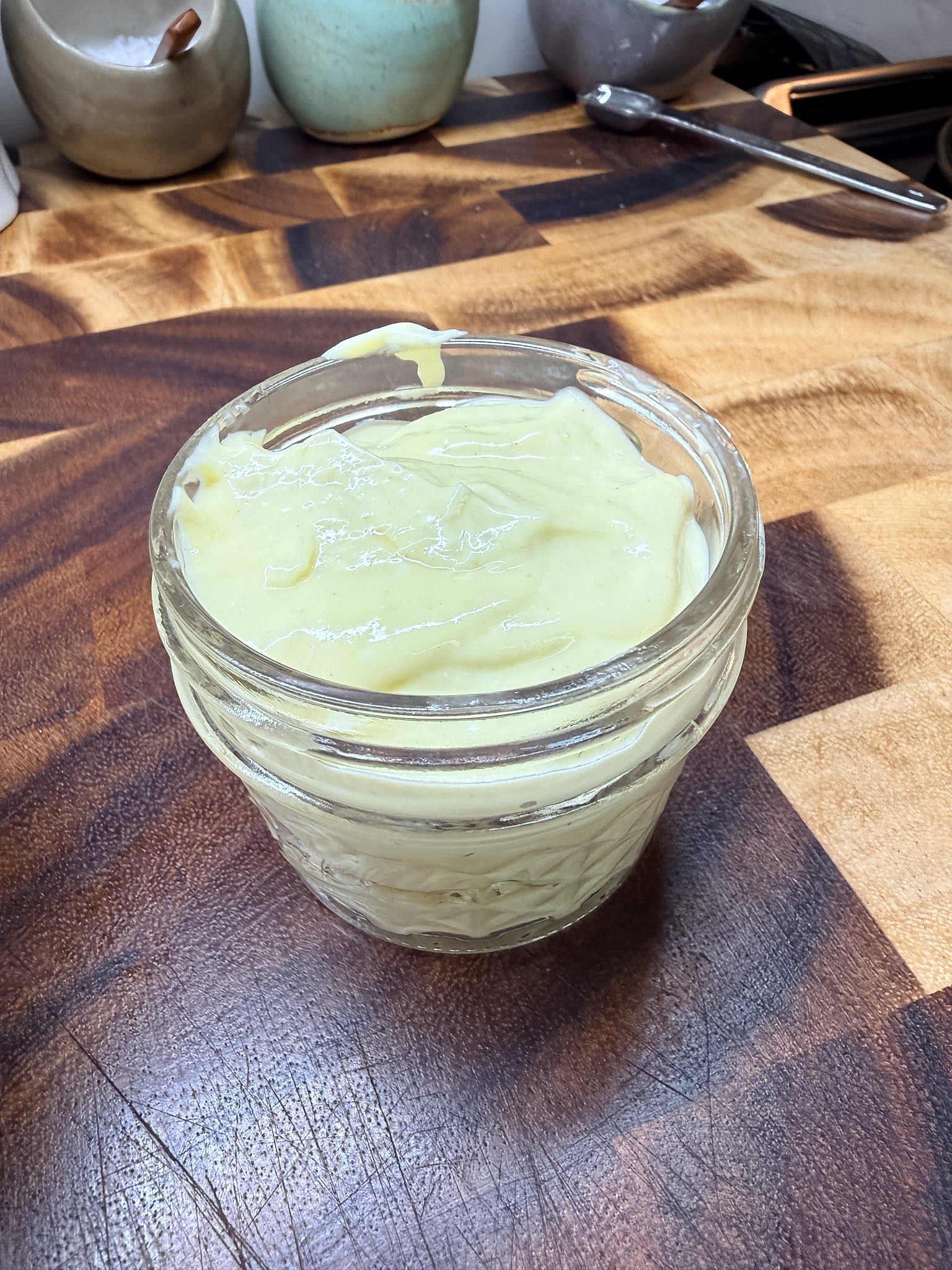
Aioli sounds fancy.
But at its core, it’s a technique — and once you understand that technique, you unlock far more than just a garlic sauce.
In this Cooking School lesson, you’ll learn:
- What aioli actually is
- How emulsification works
- Three different ways to make it
- Why one method is more reliable
- How to fix it if it breaks
This is foundational sauce knowledge — the kind that builds confidence in the kitchen.
What Is Aioli?
Traditionally, aioli is a Mediterranean sauce made by emulsifying garlic and oil.
Modern aioli (the version most home cooks make) includes egg, creating a thick, creamy emulsion similar to mayonnaise — but with bold garlic flavor.
Think of aioli as:
- Flavor-forward
- Creamy
- Structured
- Built on technique
If you understand emulsions, you understand aioli.
Why Use a Whole Egg?
We’re using one whole egg — not just the yolk.
Why?
- It builds a stable emulsion.
- It avoids waste (no leftover whites sitting in your fridge).
- It works beautifully with an immersion blender.
Efficiency is part of good cooking.
Technique Insight: Why Egg Works
Egg contains lecithin, a natural emulsifier. It helps suspend oil droplets evenly throughout the mixture, creating structure.
The smaller the oil droplets, the thicker and more stable the sauce.
Understanding Emulsification (How Aioli Thickens)
Oil and water-based ingredients do not naturally mix.
When you slowly combine oil with egg and acid (lime or lemon), the oil breaks into microscopic droplets. These droplets become suspended in the egg mixture, creating thickness.
You’ll notice:
- The mixture lightens in color
- It thickens rapidly
- It transforms from liquid to structured sauce
This same principle applies to:
- Homemade mayonnaise
- Caesar dressing
- Hollandaise
- Many vinaigrettes
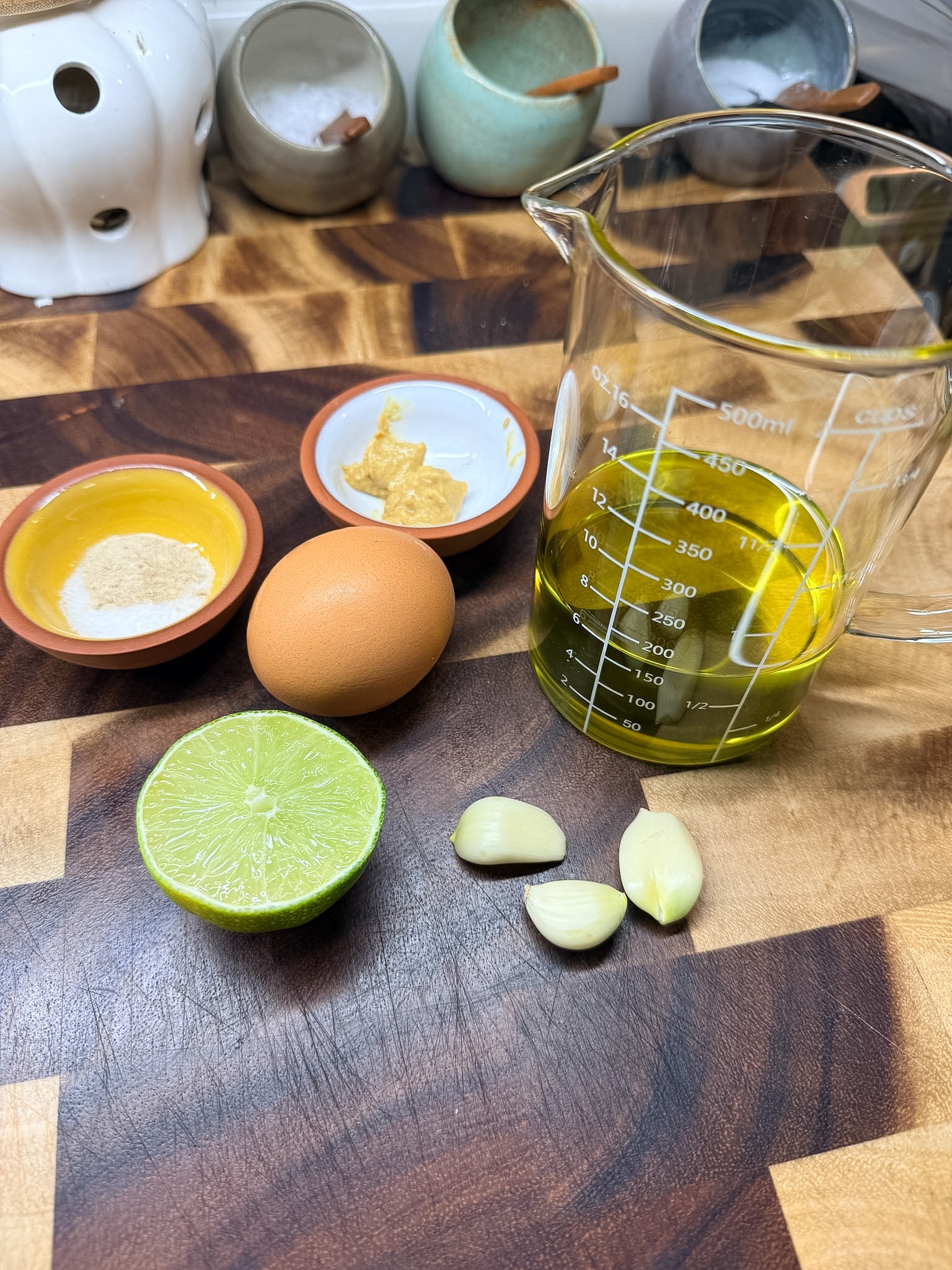
Ingredients You’ll Need
- ¾ cup neutral oil
- 1 large egg (room temperature preferred)
- 2–3 garlic cloves, pressed or finely minced
- Juice from ½ lime (about 1½ tablespoons)
- 1 teaspoon hot Chinese mustard or Dijon
- ½ teaspoon kosher salt
- ¼ teaspoon ground white pepper

Choosing the Right Neutral Oil
Use a neutral oil so the garlic shines.
Good options:
For a deeper breakdown of oils and when to use them, see my Neutral Oils Guide.
Equipment for Best Results
Recommended:
- Immersion blender
- 8oz or 4oz jars for storage.
- Garlic press
- Measuring spoons
A food processor works well if you don’t own an immersion blender.
How to Make Aioli (3 Methods)
Method 1: Immersion Blender (Recommended)
This is the most reliable method for home cooks.
- Add all ingredients to a tall jar.
- Place immersion blender directly over the egg.
- Blend on high for 10–15 seconds until thick forms.
- Slowly lift to incorporate remaining oil.
Why this works:
The blender forces immediate emulsification at the bottom, creating structure before the rest of the oil is incorporated.
Fast. Stable. Creamy.
Method 2: Food Processor
- Pulse egg, garlic, lime juice, mustard, and salt.
- With processor running, drizzle oil very slowly.
- Process until thick.
The oil must be added gradually to build the emulsion properly.
Method 3: By Hand (Technique Builder)
- Whisk egg, garlic, citrus, and salt.
- Add oil one teaspoon at a time at first.
- Once thickening begins, switch to a thin stream.
- Continue whisking until emulsified.
This method teaches you to recognize when an emulsion is forming — excellent practice for developing kitchen instinct.
Comparing the Three Methods
Comparing the Three Methods
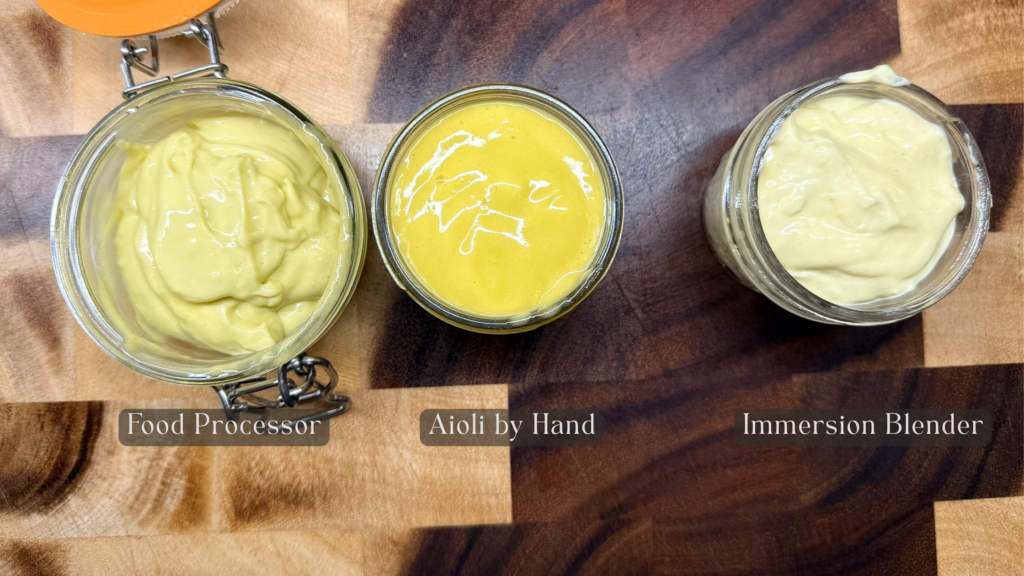
All three versions are delicious — but texture and stability differ.
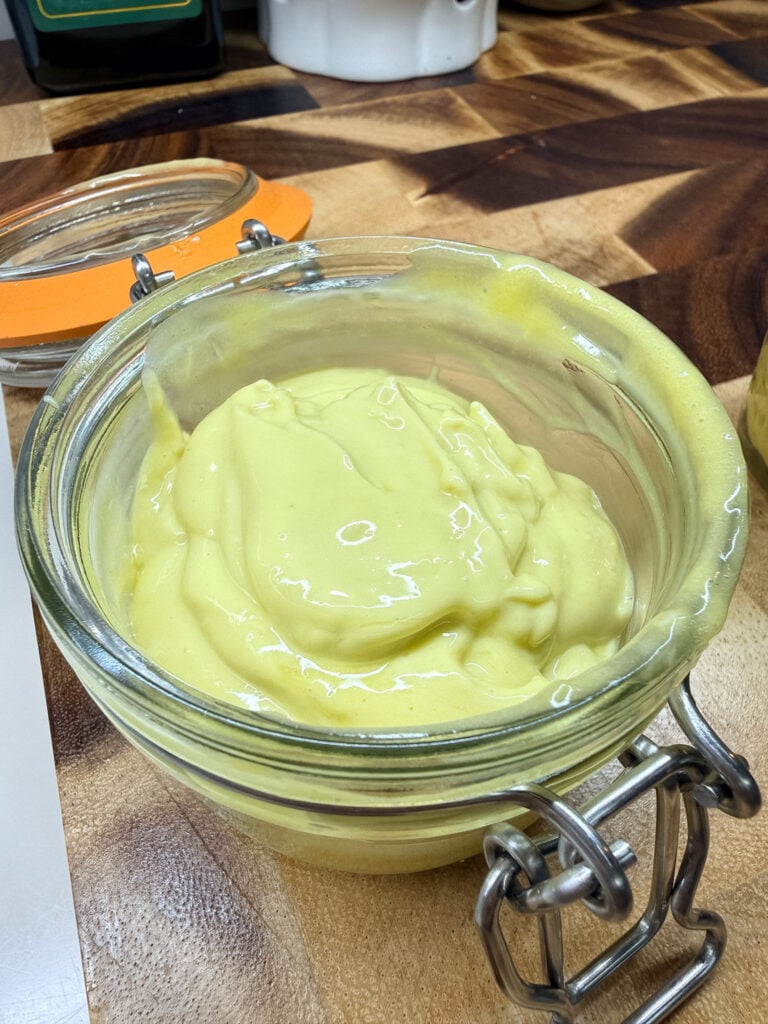
Food Processor
Creamy but slightly softer. Holds shape but relaxes more quickly.
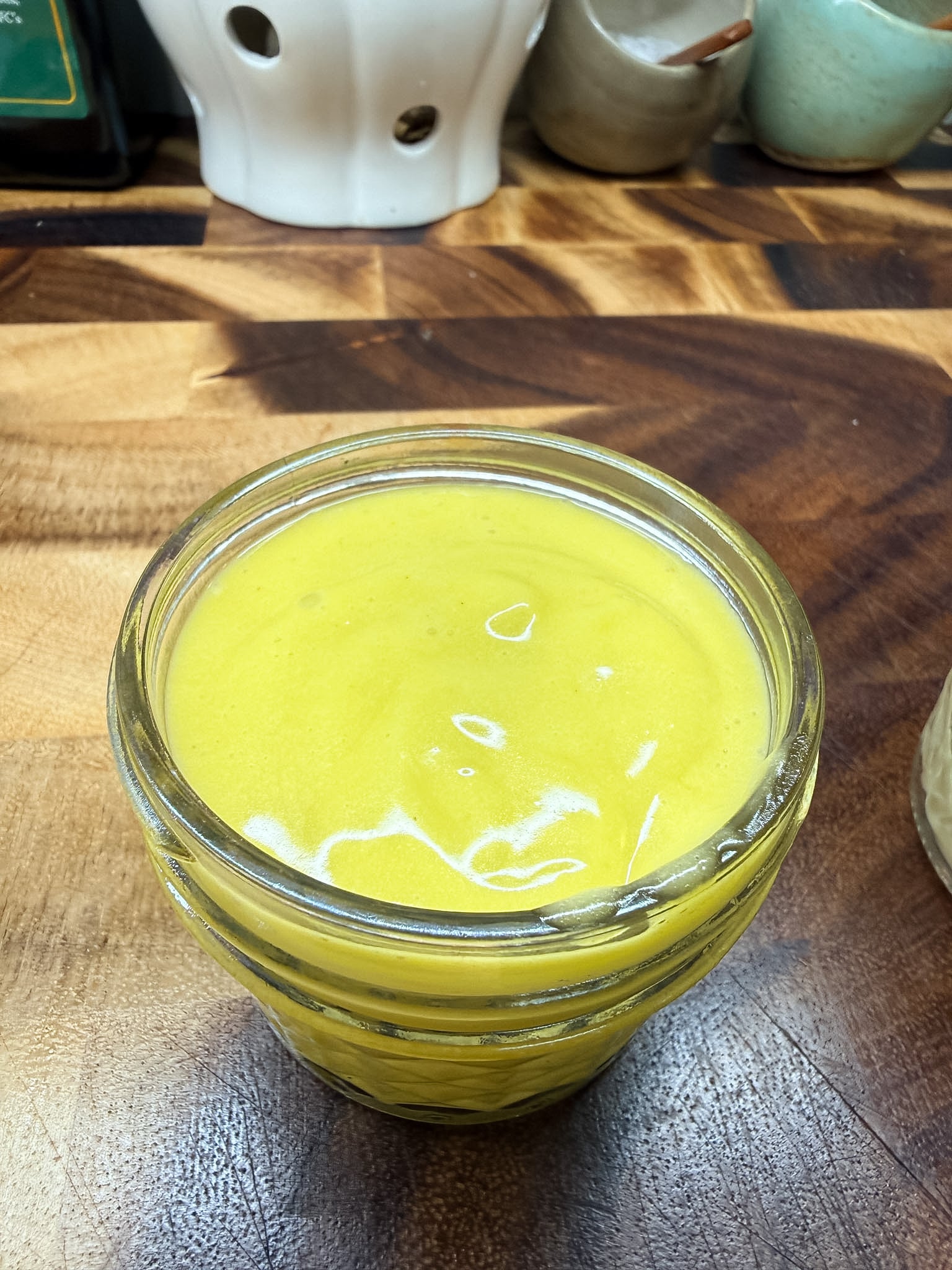
By Hand
Lightest texture. Slightly thinner. Most effort required.
Immersion Blender
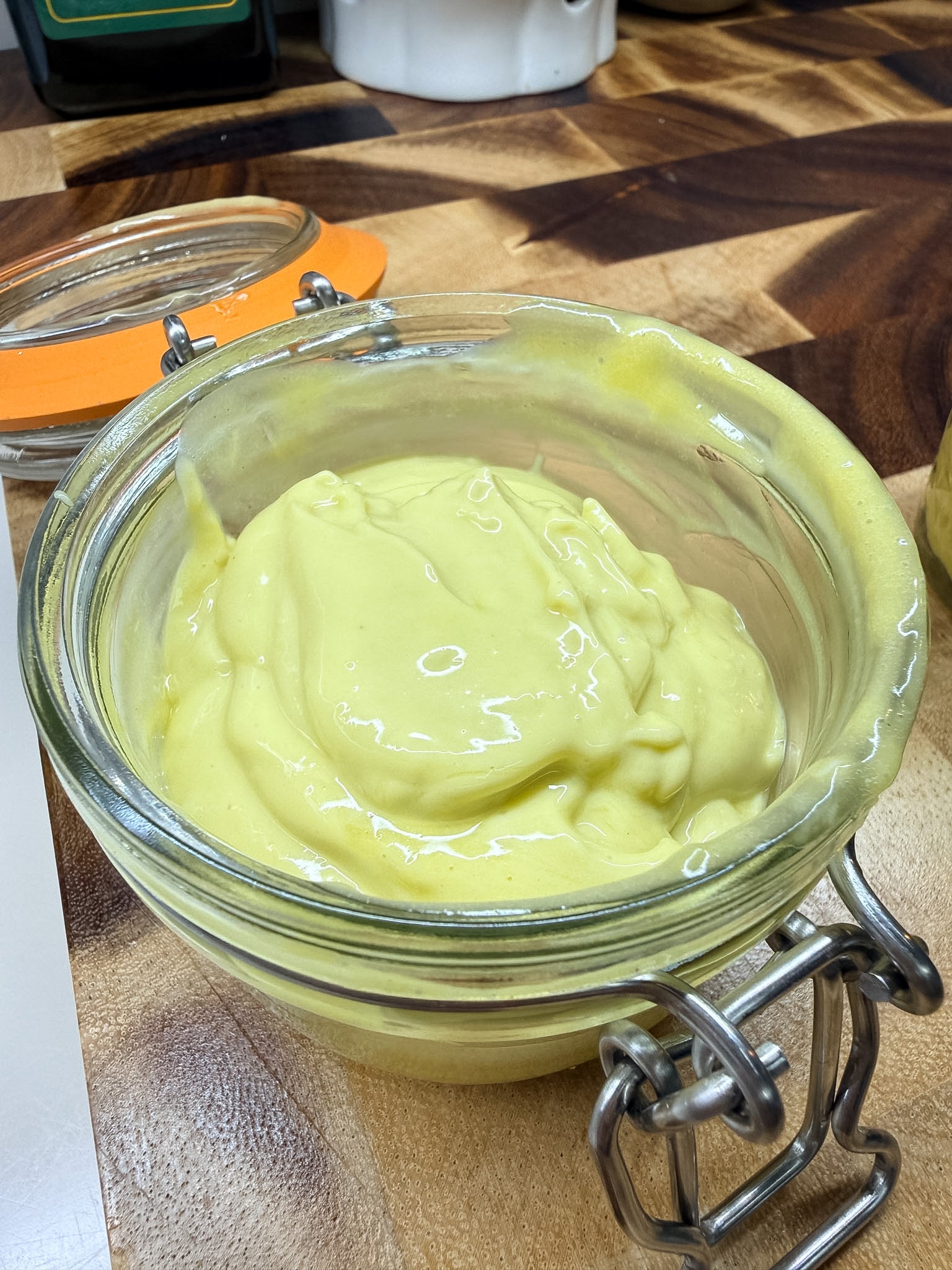
Thickest and most stable. Holds peaks. Lowest risk of splitting.
The difference comes down to droplet size and speed of emulsification.
Why Immersion Blending Is Thicker
Higher-speed blending creates smaller oil droplets. Smaller droplets create stronger structure.
Structure = stability.
So… Which Should You Choose?
If you want:
- Speed and consistency: Immersion blender
- No special tools: Food processor
- Skill-building practice: Whisk by hand
All three are valid. The technique is what matters most.
Master the emulsion once — and you’ll carry that skill into dozens of other sauces.
Troubleshooting
If It Splits
Don’t toss it.
Whisk the broken mixture slowly into one fresh egg yolk. The new yolk will rebuild the structure.
Learning to fix a sauce is part of becoming a confident cook.
Aioli vs. Mayonnaise
| Aioli | Mayonnaise |
|---|---|
| Strong garlic flavor | Neutral flavor |
| Often includes fresh garlic | Typically, no fresh garlic |
| Can use citrus | Acid (vinegar or citrus) |
| Served as a flavor-forward sauce | Used as a base condiment |
Think of aioli as flavored, elevated mayonnaise with presence.
Flavor Variations
Once you understand the base, you can adjust:
- Roasted Garlic Aioli – Sweeter, milder
- Lemon Herb Aioli – Add chopped parsley or chives, and change lime to lemon juice
- Spicy Aioli – Add chili paste or a pinch of cayenne pepper
- Umami Aioli – Add a touch of soy sauce or fish sauce
Technique first. Variations second.
Cooking with Kids
This recipe is a great visual science lesson.
Kids can:
They get to see liquid transform into structure — which feels a little magical the first time.
Storage & Skill Level
Store in an airtight container in the refrigerator for 3–4 days.
Skill Level: Beginner
(With strong technique-building value for intermediate cooks.)
Continue Your Cooking School
If you enjoyed learning how to make aioli, these Cooking School guides will help you build even more confidence in the kitchen.
Garlic Aioli (Whole Egg Method – 3 Ways)
- Total Time: 5 minutes
- Yield: 1 cup of aioli 1x
Description
This creamy garlic aioli is made with one whole egg and neutral oil for a foolproof emulsion. Includes immersion blender, food processor, and by-hand methods.
Ingredients
- 1 large egg (room temperature preferred)
- 2–3 garlic cloves, pressed or finely minced
- 1 1/2 tablespoons fresh lime juice (or lemon juice)
- 1 teaspoon Dijon mustard or hot Chinese mustard
- 1/2 teaspoon kosher salt (or to taste)
- 1/4 teaspoon ground white pepper
- 3/4 cup neutral oil (avocado, grapeseed, light olive oil, or canola)
Instructions
Method 1: Immersion Blender (Recommended)
-
Add egg, garlic, lime juice, mustard, salt, white pepper, and oil to a tall jar.
-
Place immersion blender directly over the egg at the bottom of the jar.
-
Blend on high for 10–15 seconds until thick and creamy forms.
-
Slowly lift the blender upward to incorporate remaining oil until fully emulsified.
-
Taste and adjust seasoning if needed.
Method 2: Food Processor
-
Add egg, garlic, lime juice, mustard, and salt to the food processor. Pulse to combine.
-
With the processor running, slowly drizzle in oil in a thin, steady stream.
-
Process until thick and creamy.
-
Adjust seasoning to taste.
Method 3: By Hand
-
In a bowl, whisk egg, garlic, citrus juice, and salt vigorously.
-
Add oil one teaspoon at a time while whisking constantly.
-
Once mixture thickens and lightens in color, transition to a thin, steady stream of oil.
-
Continue whisking until fully emulsified and thick.
-
Adjust seasoning as needed.
Equipment
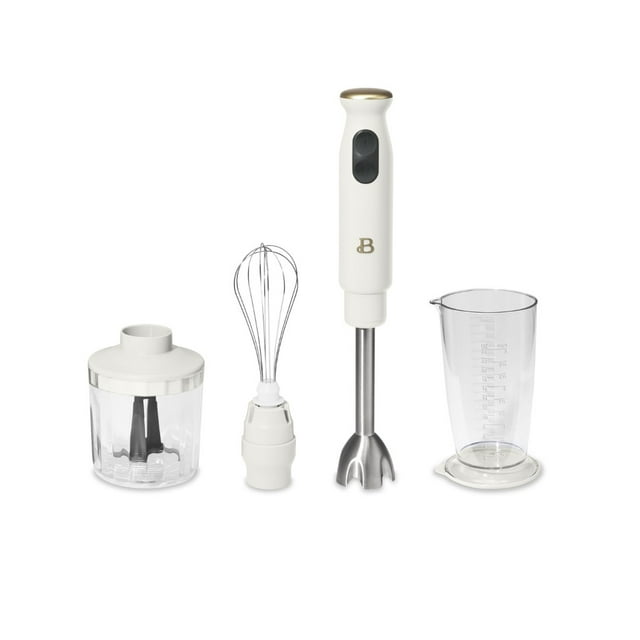
Beautiful 2-Speed Immersion Blender with Chopper & Measuring Cup, White Icing by Drew Barrymore
Buy Now → Buy Now →
  Buy Now →
Walfos Small Whisk set of 3 (5+7+10in)
Buy Now →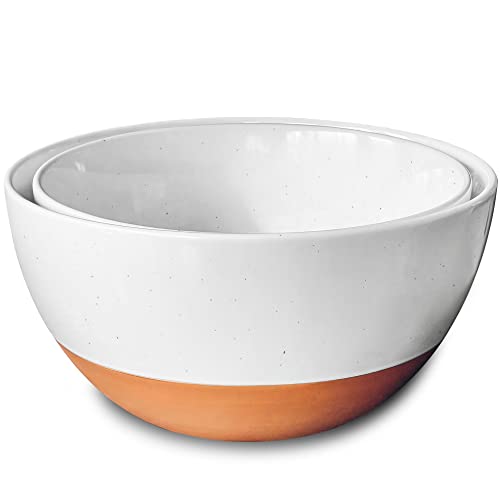
Mora Ceramics Small Mixing Bowls Set of 2 – 2.5 & 1.6 Qt (Vanilla White)
Buy Now →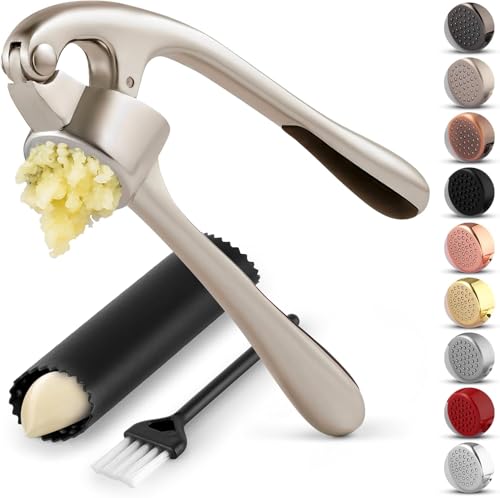 Buy Now →
Le Creuset Measuring Spoons, Gold, Set of 5
Buy Now →Notes
- If the aioli splits, whisk the broken mixture slowly into one fresh egg yolk to rebuild the emulsion.
- Store in an airtight container in the refrigerator for 3–4 days.
- For a milder flavor, substitute roasted garlic for raw garlic.
- For best results, use room temperature ingredients to help the emulsion form properly.
*Time is based on the use of either an immersion blender or a food processor. By hand will take around 15-20 minutes, depending on you and your stamina.
- Prep Time: 5 minutes
- Category: condiment
- Method: No Cooking
- Cuisine: Mediterranean