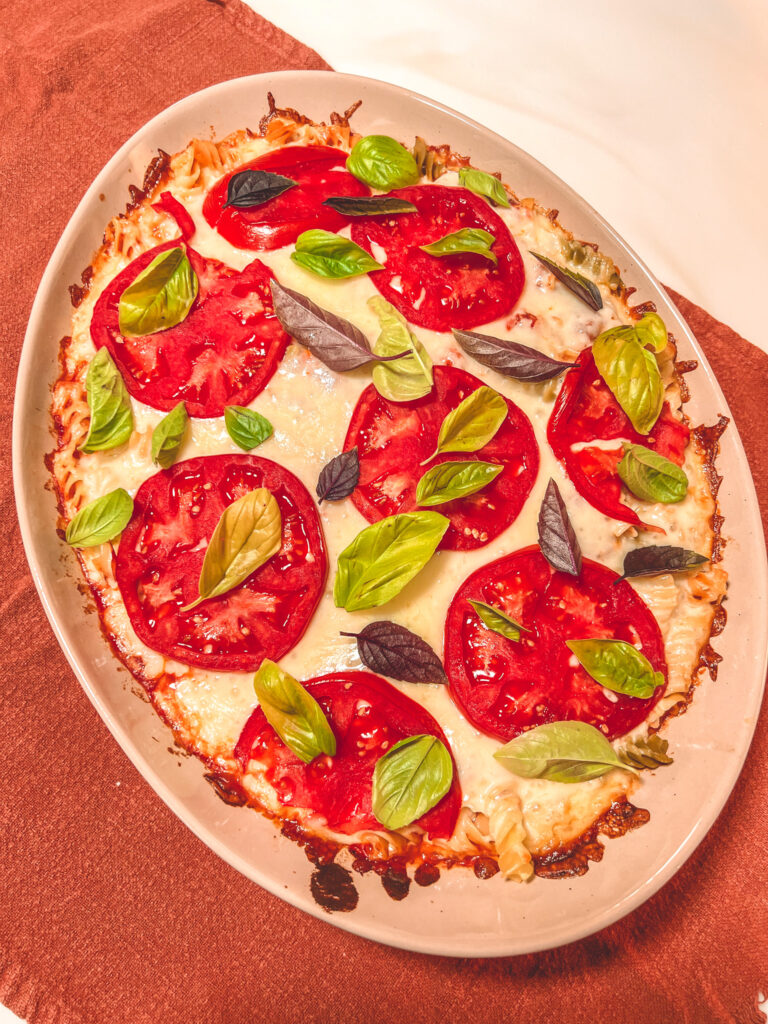
5 Must-Have Asian Ingredients I Use in Everyday Cooking
These five Asian pantry staples are ingredients I reach for almost as often as salt and pepper. I use them in everything from pasta and soups to salad dressings—plus I’m sharing recipes to try each one.
This post may contain affiliate links, which means that I make a small commission off items you purchase at no additional cost to you. Please read my Affiliate Disclosure
I don’t know about you, but even with a well-stocked pantry, there are always a few ingredients I reach for over and over and over again.
Being Asian American, many of mine are Asian-forward. Some are ingredients I grew up with, others are newer discoveries I’ve learned to appreciate — but either way, they’re on repeat in my kitchen. And not just in my family’s Chinese recipes either. I use them in everything from pasta to salad dressings.
Wondering which ones those are? I picked my top five must-have Asian ingredients that I use almost as much as salt and pepper — and I’ll show you exactly how I use them in everyday cooking.
Chili Crisp
Crunchy. Spicy. Addictive.
Chili crisp is one of those ingredients that instantly upgrades whatever it touches. It adds heat, texture, and deep savory flavor — even in dishes that have nothing to do with Asian cuisine.
Allergy note: Many chili crisp brands contain peanuts, but Fly By Jing Xtra Crunchy Sichuan Chili Crisp is nut-free, which makes it a great option for peanut-allergy households.
Where chili crisp shines outside of Asian cooking:
- Pizza
- Eggs
- Roasted vegetables
- Grain bowls
- Creamy sauces
👉 Recipe to try: Chili Crisp Alfredo
Yes — Alfredo. A spoonful of chili crisp stirred into a creamy pasta sauce adds just enough heat and crunch to make it unforgettable.
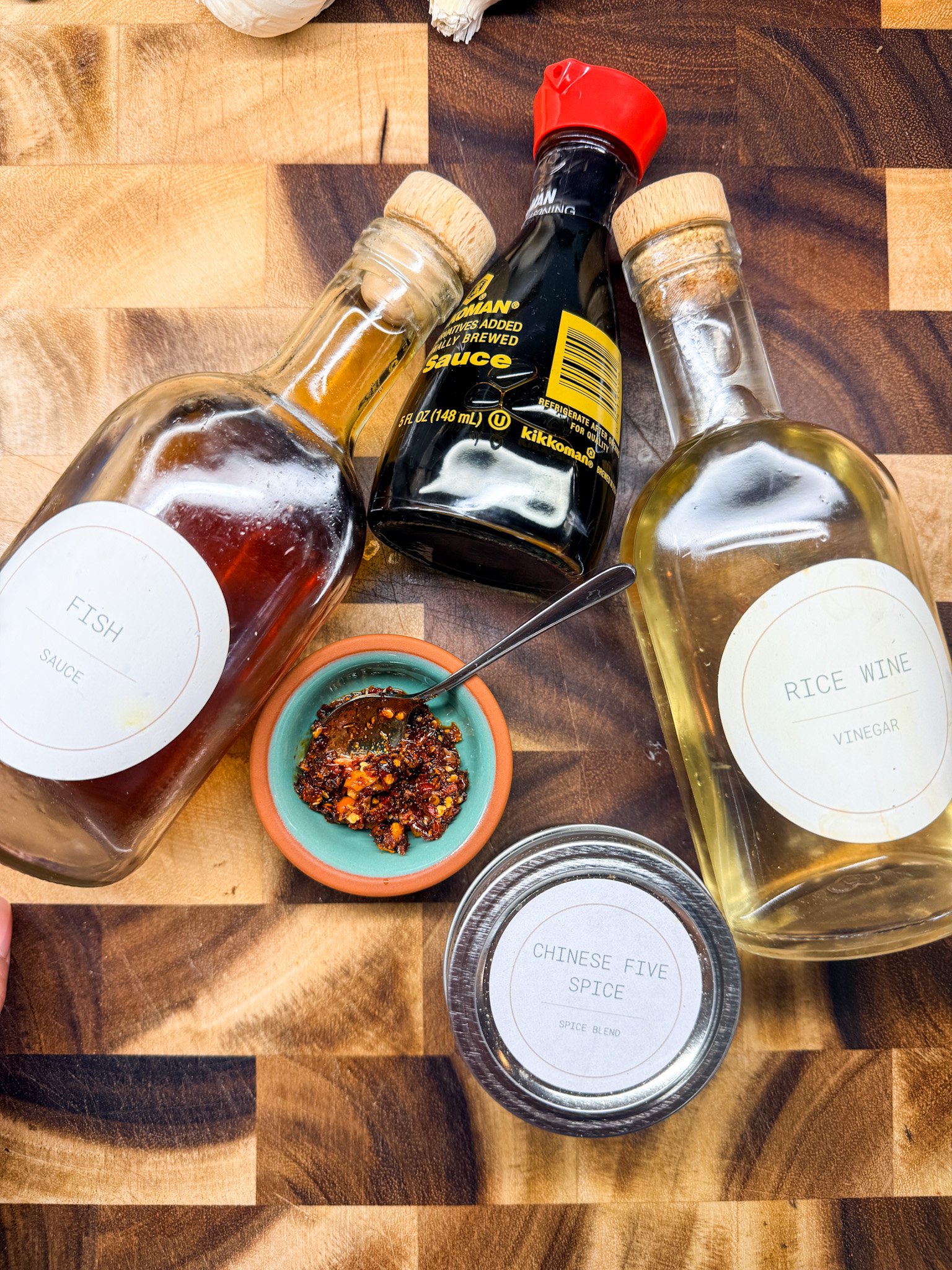
Fish Sauce
The secret ingredient you won’t taste — but will miss if it’s gone.
Fish sauce has a reputation problem, and honestly? It doesn’t deserve it. Used properly, it doesn’t make food taste fishy — it makes food taste more like itself.
I use fish sauce anywhere I want depth, saltiness, and umami without heaviness.
Unexpected places fish sauce works beautifully:
- Pasta sauces
- Soups & stews
- Marinades
- Salad dressings
- Tartar sauce (yes, really)
👉 Recipes to try: One-Pot Rigatoni Ragu or One-Pot Ground Beef Stroganoff
A small amount of fish sauce in pasta dishes deepens the flavor and adds richness, making it taste like it simmered all day. If a recipe traditionally uses anchovies or sardines for depth, fish sauce can often do the same job — quietly and seamlessly.
Chinese Five Spice Powder
Warm, cozy spice — not spicy.
Chinese five spice is one of the most misunderstood spice blends. It’s not hot or overpowering — it’s warming, slightly sweet, and incredibly versatile.
Think of it as a cousin to pumpkin spice, not a bold seasoning that takes over a dish.
Ways I use five spice beyond savory Asian dishes:
- Roasted meats
- Vegetables
- Baking
- Spice blends
- Fall-inspired recipes
👉 Recipes to try: Pumpkin Spice Mix (with Five Spice) or Homemade Breakfast Sausage Patties (Freezer-Friendly & Easy)
Chinese five spice is traditionally used with richer, fattier foods because its warm, aromatic spices help balance and cut through that richness. I love using it in sausage for that reason — it adds depth without overpowering — and I also sneak it into my pumpkin spice mix for extra warmth and complexity. Once you start using it this way, there’s no going back.
Rice Wine Vinegar
Gentle acidity that doesn’t overpower.
Rice wine vinegar is softer and slightly sweeter than white vinegar, which makes it ideal when you want brightness without harshness.
It’s one of my favorite “background ingredients” — you don’t notice it, but everything tastes better.
Where rice wine vinegar really shines:
- Salad dressings
- Slaws
- Sauces
- Quick pickles
- Marinades
👉 Recipe to try: Homemade Ranch Dressing
Rice wine vinegar gives ranch just enough tang without overpowering the herbs or creaminess.
🧂 Soy Sauce (A Good One)
A pantry staple — quality matters.
Soy sauce isn’t just for stir-fries. A good, naturally brewed soy sauce adds salt, color, and umami to all kinds of dishes.
I always recommend using a high-quality option like Kikkoman, which is widely available and consistently reliable.
Everyday uses for soy sauce:
- Soups
- Marinades
- Gravy
- Sauces
- Even a splash in stews
👉 Recipe to try: Comforting Cod Fish Soup with Vegetables
Soy sauce adds depth and seasoning to the broth without making it taste overtly “soy-forward.”
Final Thoughts
These ingredients aren’t specialty items — they’re flavor builders I use week after week, even when I’m not cooking Asian food.
If you’re looking to cook with more confidence and less guesswork, stocking just a few of these can make a huge difference.
Which one are you going to use first?
Comment below and let me know — I’d love to hear how you use it in your kitchen. 🥰
Cheers 🥂,

Disclosure:
This roundup may contain affiliate links, which means I may earn a small commission if you purchase through my links—at no extra cost to you. I only share products and recipes I truly use, love, or would recommend to my own family. Thanks for supporting Cheers, Jenn!