What Is Béchamel? (And How to Make It Without the Lumps)
Béchamel is three ingredients and one technique. Master it once and it shows up in your mac and cheese, your lasagna, your pot pie — and you’ll finally understand why they taste the way they do.
This post may contain affiliate links, which means that I make a small commission off items you purchase at no additional cost to you. Please read my Affiliate Disclosure
Growing up, my mom made this sauce all the time. She never called it béchamel. It was just simply the thickening part — the thing you made before adding the cheese, before it went into the lasagna, before it became gravy. From her, there wasn’t a name for it. She just knew how to make it.
It wasn’t until I started cooking with my dad — a chef for over 30 years — that I learned it actually had a name. Béchamel. One of the five French mother sauces. And suddenly a whole category of dishes clicked into place for me.
My dad called it by name. My mom just made it. Either way, it ends up in the pan — and once you know how to make it yourself, a lot of recipes get a whole lot easier. This post covers what béchamel is, how to make it, and the cold vs. warm milk debate that more people have opinions on than you’d expect.
Why You’ll Love This Recipe
- Once you know this technique, mac and cheese, lasagna, croque monsieur, and pot pie all make more sense
- It’s three ingredients and about 15 minutes — nothing complicated once you understand the method
- The cold vs. warm milk section will save you from the most common mistake home cooks make
- You can make it ahead and reheat it gently — great for meal prep and big dinners
- It’s the base for Mornay sauce (add cheese) which is what most people are actually after anyway
- This post links directly to my Mac and Cheese 101 and Smoked Gouda and Bacon Mac and Cheese so you can put it to work immediately
What Is Béchamel?
Béchamel (bay-sha-MEL) is a white sauce made from a white roux — butter and flour cooked together briefly — and whole milk. It’s thickened by the roux, seasoned simply with salt, white pepper, and often a little nutmeg, and it serves as the base for a huge range of dishes and other sauces. In French cooking, it’s considered one of the foundational building blocks. In home cooking, it’s just a really useful thing to know.
If you haven’t read my roux post yet, I’d suggest starting there — What Is a Roux? — because understanding what a roux does makes béchamel click faster. The short version: you cook the butter and flour together first to remove the raw flour taste, and then the milk goes in to create the sauce.
Why Learning Béchamel Changes Everything
Here’s the thing about béchamel — it’s not really just a sauce. It’s a key that unlocks a whole category of cooking. Once you know how to make it, you’ll start recognizing it everywhere. And recipes that used to feel complicated suddenly make a lot more sense.
A few things you can make once you have this down:
- Mac and cheese sauce (Mornay — béchamel plus cheese)
- Lasagna white layer
- Creamed spinach
- Chicken pot pie filling base
- Scalloped potatoes
- Croque monsieur
- Any cream-based pasta sauce
That’s not a short list. Learning béchamel isn’t learning one recipe — it’s learning a foundation.
How Béchamel Fits In
It helps to see where béchamel sits in the bigger picture. Here’s a quick reference for how it compares to the other roux-based sauces you’ll eventually run into:
| Technique | Liquid | Purpose |
|---|---|---|
| Roux | None | Thickening base — the foundation |
| Béchamel | Milk | Classic white sauce |
| Velouté | Stock | Lighter sauce or soup base |
| Mornay | Milk + cheese | Cheese sauce — mac and cheese, lasagna |
About the Ingredients
Unsalted butter: Standard for béchamel. Unsalted gives you control over the final seasoning. You’ll use equal parts butter and flour by weight.
All-purpose flour: Same as a standard roux. Spoon and level when you measure — don’t scoop directly from the bag or you’ll pack in more flour than you need, which can make your sauce gluey.
Whole milk: Whole milk is the classic choice — the fat content gives you a richer, creamier result. 2% works but the sauce will be slightly thinner. Avoid skim milk here; it doesn’t have enough fat to give you the texture you’re looking for. If you want an even richer sauce, replace some of the milk with heavy cream.
Salt, white pepper, and nutmeg: White pepper is traditional because it doesn’t add black specks to a white sauce. Nutmeg is subtle but it’s there for a reason — it rounds out the flavor in a way that’s hard to identify but easy to notice when it’s missing. Start with just a pinch and go from there.
Cold Milk vs. Warm Milk — Does It Actually Matter?
Yes. And here’s the honest breakdown of both methods so you can decide which one works for you.
Cold Milk
- Creates a thicker sauce faster
- Must be added in small increments — a splash at a time
- Requires constant whisking the entire time
- Higher risk of lumps if you rush it or add too much at once
- Good option if you want quick results and don’t mind being attentive
Warm Milk
- Dramatically reduces the risk of lumps
- Can be added more continuously — still slowly, but less stressful
- Sauce may take a few extra minutes to reach full thickness
- If you want it richer, a splash of heavy cream at the end does the job
- Better choice if you’re new to this or cooking other things at the same time
For what it’s worth, I always go cold milk. Small increments, constant whisking — I love the control it gives me and the sauce comes together faster. I used to do warm when I was first learning, but I haven’t done that in years. Once you get the rhythm of it, there’s really no going back.

How to Make Béchamel
Make your white roux
Melt butter in a heavy-bottomed saucepan over medium heat. Once it’s foaming, add the flour all at once and whisk immediately. Cook for 2–3 minutes, stirring constantly, until the paste smells neutral and slightly toasty — you’re cooking out the raw flour taste. It should stay pale, not take on any color.
Prepare your milk
For cold milk (my method): measure it out and have it ready to add in small increments — about ¼ cup at a time. For warm milk: heat in a small saucepan over low heat until just steaming. No need to boil it.
Add the milk gradually
With your roux over medium-low heat, begin adding the milk. Cold milk: add about ¼ cup at a time and whisk until fully incorporated before adding more. Warm milk: pour in a slow, steady stream while whisking continuously. Either way — don’t rush this step. The gradual addition is what keeps the sauce smooth.
Cook until thickened
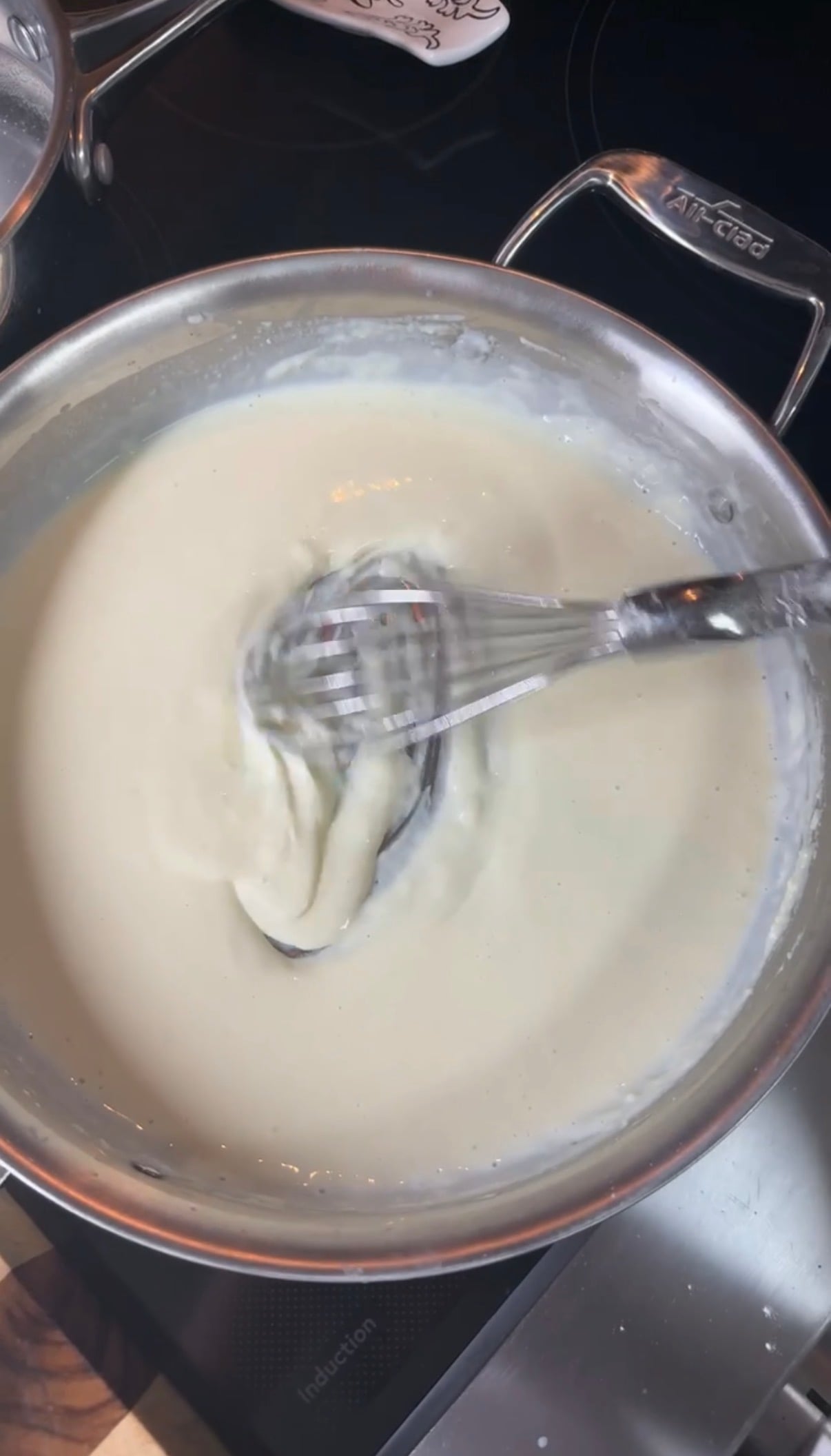
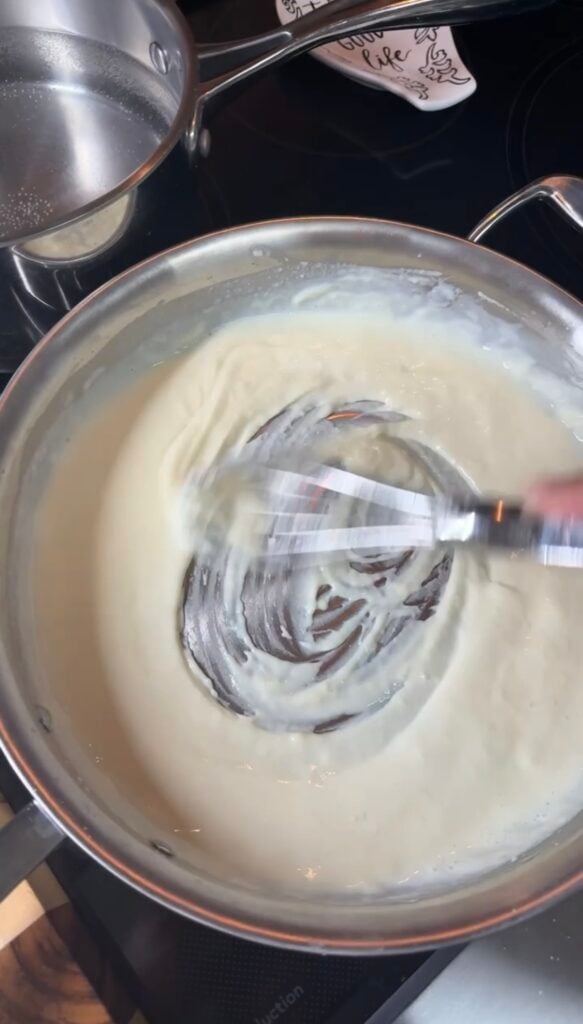
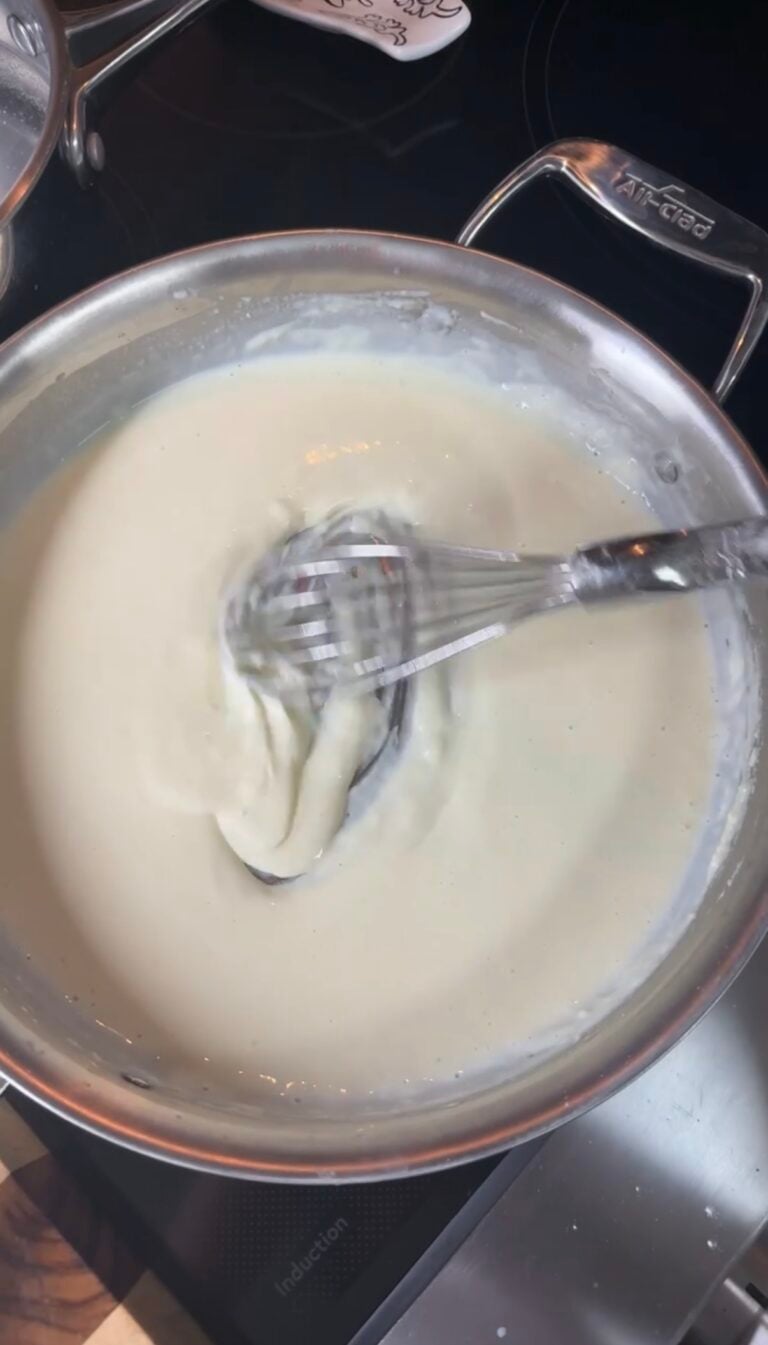
Keep the heat at medium-low and whisk or stir frequently. The sauce will thicken as it heats — usually 5–8 minutes. Here’s what to look for: the whisk trails will start to hold for a second before disappearing. The bubbles will slow down and get thicker. And when you drag your finger across the back of a spoon, the line holds clean. That’s your sauce.
Season and finish
Remove from heat and season with salt, white pepper, and a small pinch of nutmeg. Taste and adjust. If you’re turning this into a cheese sauce (Mornay), add your shredded cheese now, off the heat, and stir until melted. The residual heat does the work — going back to the burner can make the cheese grainy.
Cooking with Kids
- Ages 8+: Let them measure the butter and flour and help with the early whisking of the roux — constant stirring is a satisfying task and low-stakes at this stage.
- Ages 10+: They can pour the warm milk slowly while you whisk, or take over whisking while you pour. This is a great two-person kitchen moment.
- All ages: The “spoon test” at the end is a great teaching moment — show them what “coats the back of a spoon” actually looks like and let them test it themselves.
- Heads up: The pan gets hot. Keep younger kids away from the stovetop once the milk goes in and things start bubbling.
Jenn’s Kitchen Tip
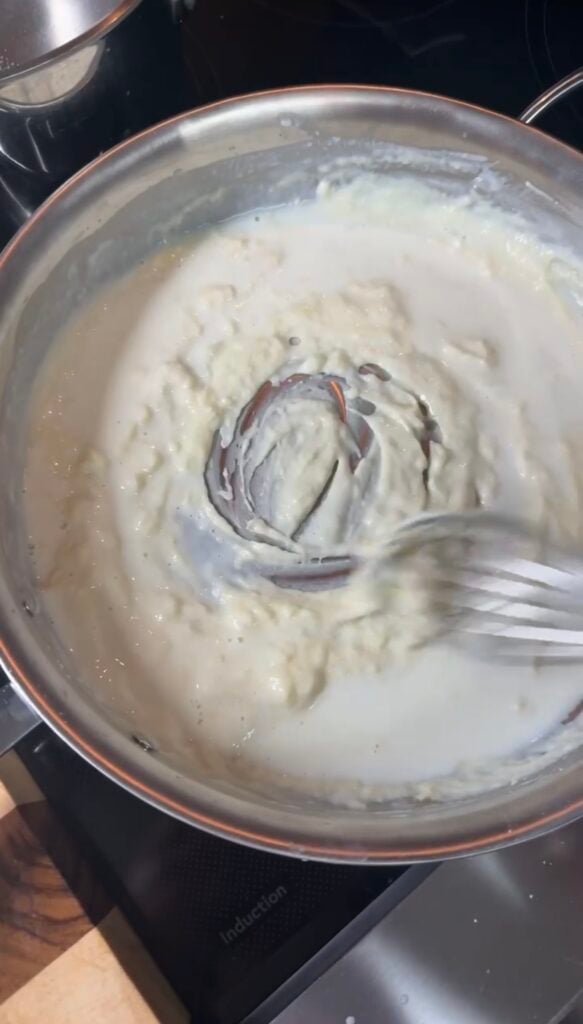
- If your sauce gets lumpy, don’t throw it out. Run it through a fine mesh strainer and keep going. It will smooth right out.
- Béchamel thickens as it cools. If you’re making it ahead, pull it off the heat when it’s slightly thinner than you want — it’ll be exactly right once it sits.
- To store without a skin forming, press a piece of plastic wrap or parchment directly onto the surface of the sauce before refrigerating.
- To reheat, add a splash of warm milk and whisk over low heat. Don’t rush it or it can break.
- White pepper is traditional, but black pepper works fine — you’ll just see the specks. No one is going to complain.
- Want to go richer? Swap up to half the milk for heavy cream. That’s the version I use for mac and cheese.
Frequently Asked Questions
Technique-wise, they’re almost identical — both are a roux finished with milk. The difference is mostly in seasoning and intent. White gravy (country gravy) tends to be more aggressively seasoned, often with black pepper and sometimes pan drippings. Béchamel is more neutral and meant to be a base that other flavors build on.
Yes, with some adjustment. Use a neutral oil or dairy-free butter for the roux, and oat milk or unsweetened cashew milk for the liquid — both hold up better than almond milk, which can get thin and watery. The flavor will be slightly different but the technique is the same.
The roux wasn’t cooked long enough. You need at least 2–3 minutes of active cooking to get rid of the raw flour taste before the milk goes in. If the roux still smells starchy or chalky, keep cooking it.
Yes — just whisk in a splash of warm milk over low heat until you reach the consistency you want. Add it gradually so you don’t overshoot.
Keep cooking it. Low heat, frequent stirring, and a few more minutes will continue to thicken it. If it’s significantly too thin, you can make a small extra bit of roux separately and whisk it in — but usually patience is all you need.
Mornay is béchamel with cheese melted in — typically Gruyère, Parmesan, or in my house, smoked Gouda. It’s what most people are actually making when they make a cheese sauce for mac and cheese. Stir the cheese in off the heat once the béchamel is finished.
Béchamel is one of those techniques that quietly shows up everywhere once you know what to look for. Mac and cheese, lasagna, croque monsieur, scalloped potatoes — it’s behind more of your favorite comfort food than you might realize. And now that you can make it, those recipes get a lot easier to pull off.
If you try it, I’d love to know what you made with it. Drop a comment below or tag me on Instagram — I always want to see what’s coming out of your kitchen.
You’ve got roux. You’ve got béchamel. Next up in the Cooking School series — we’re turning this into a proper cheese sauce for mac and cheese.
Miss the last lesson? Start with What Is a Roux?

Classic Béchamel Sauce
- Total Time: 15-18 minutes
- Yield: ~2 cups
Ingredients
- 2 tbspunsalted butter
- 2 tbspall-purpose flour
- 2 cups whole milk— Cold or warm — see post for full breakdown
- 1/4 tsp salt
- 1/4 tsp white pepper
- 1 pinch of nutmeg
Instructions
- Make the roux. Melt butter over medium heat. Once foaming, add flour all at once and whisk immediately. Cook 2–3 minutes until the raw flour smell is gone.
- Add milk gradually. Add cold milk in ¼ cup increments, whisking fully between each addition. Or add warm milk in a slow, steady stream. Don’t rush it.
- Cook until thickened. Stir frequently over medium-low heat for 5–8 minutes until the sauce coats the back of a spoon.
- Season and finish. Off the heat, add salt, white pepper, and a pinch of nutmeg. For Mornay sauce, stir in shredded cheese off the heat.

Notes
- Lumps? Strain through a fine mesh strainer and keep going.
- Too thick? Whisk in a splash of warm milk over low heat.
- Too thin? Keep cooking — it’ll get there.
- Storage: Press plastic wrap directly onto the surface. Refrigerate up to 3 days. Reheat gently with a splash of milk.
- Prep Time: 3 minutes
- Cook Time: 12-15 minutes
- Category: cooking school
- Method: stove top
- Cuisine: French